

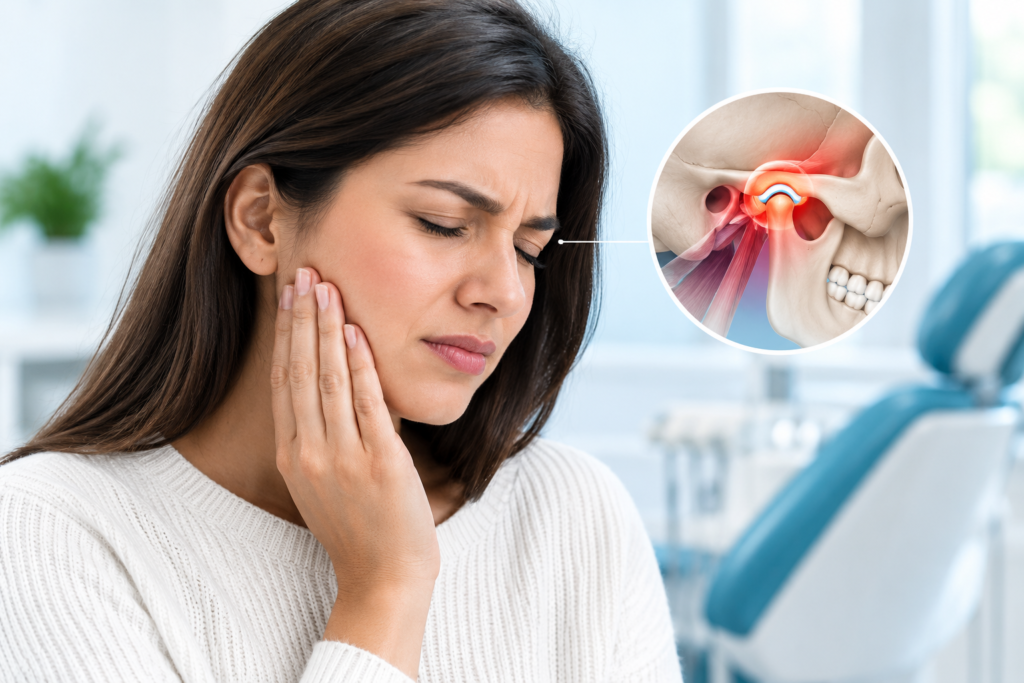
Have you ever experienced jaw pain while chewing, a clicking sound when opening your mouth, or headaches that seem to start near your temples? These symptoms may be associated with a temporomandibular joint (TMJ) disorder.
Your TMJ connects your lower jaw to your skull and helps you talk, chew, yawn, and open and close your mouth. When the joint or surrounding muscles are affected, everyday activities can become uncomfortable.
The good news is that many TMJ-related problems can be managed with appropriate care. If you are experiencing ongoing jaw discomfort, understanding the possible causes and knowing when to seek professional advice can help you take the next step toward relief.
At Sapphire Dental Centre in Milton, patients can explore their concerns with a dental team that provides TMJ (TMD) therapy. Here is what you should know about TMJ pain, its common symptoms, and when to see a dentist.
What Is TMJ Disorder?
The temporomandibular joints are located on either side of your face, just in front of your ears. These joints work with surrounding muscles and tissues to support smooth jaw movement.
TMJ disorders, also called temporomandibular disorders (TMD), refer to conditions affecting these joints or the muscles responsible for moving the jaw. Symptoms can range from occasional clicking to persistent pain, stiffness, or difficulty opening the mouth.
Not every clicking or popping sound indicates a problem. However, when these sounds occur alongside pain or restricted movement, a dental assessment may help identify the cause.
Common Causes of TMJ Pain
TMJ pain can develop for several reasons. In many cases, more than one factor may contribute to the discomfort.
1. Teeth Grinding and Jaw Clenching
Grinding your teeth or clenching your jaw, particularly during sleep, can place additional strain on the jaw muscles and joints. Some people notice soreness upon waking, headaches, or tenderness around the face.
2. Stress and Muscle Tension
Stress may contribute to jaw clenching and increased muscle tension. If you frequently hold your jaw tightly during the day, the muscles around the joint may become tired or uncomfortable.
3. Jaw Injury
An injury to the jaw or face may affect the joint and surrounding tissues. If jaw pain begins after an accident or impact, it is important to seek an appropriate assessment.
4. Joint-Related Problems
Changes affecting the joint’s cushioning disc, inflammation, or other joint conditions may contribute to pain, clicking, or difficulty moving the jaw.
5. Overworking the Jaw
Frequent gum chewing, biting hard foods, or repeatedly opening the mouth very wide may aggravate symptoms in some people, particularly during a flare-up.
Understanding the possible cause of your TMJ pain is important because the most appropriate treatment depends on your symptoms and individual circumstances.
What Are the Common Symptoms of TMJ Disorder?
TMJ symptoms can differ from person to person. Some people experience mild discomfort occasionally, while others find that symptoms interfere with eating, speaking, or sleeping.
Common signs include:
- Jaw pain or tenderness: Discomfort around the joint, cheeks, or jaw muscles.
- Clicking or popping sounds: Noises when opening or closing the mouth, particularly when accompanied by pain.
- Difficulty chewing: Discomfort or fatigue when eating.
- Jaw stiffness: Feeling that your jaw does not move as freely as usual.
- Headaches: Pain around the temples that may be associated with jaw muscle tension.
- Ear-area discomfort: Pain near the ears, even when no obvious ear problem is present.
- Limited jaw movement: Difficulty opening your mouth fully or moving your jaw comfortably.
These symptoms can also occur with other dental or medical conditions. A professional assessment can help determine whether TMJ dysfunction is the likely cause.
How Can You Help Relieve TMJ Discomfort at Home?
For mild symptoms, a few simple measures may help reduce strain on the jaw while you arrange an assessment if needed.
Choose softer foods. Temporarily choose foods that require less chewing, especially when your jaw feels sore. Avoid hard, chewy, or crunchy foods if they aggravate your symptoms.
Avoid excessive jaw movement. Try not to chew gum, bite your nails, or repeatedly open your mouth wider than necessary.
Consider a warm or cold compress. Applying a warm or cold compress to the affected area may provide temporary comfort. Wrap it in a cloth and avoid applying extreme temperatures directly to your skin.
Pay attention to clenching. During the day, check whether you are holding your teeth tightly together. When resting, your jaw should generally feel relaxed rather than clenched.
Manage stress where possible. Gentle relaxation techniques and regular breaks may help reduce habits associated with muscle tension.
These measures may help with temporary discomfort, but they do not replace professional evaluation when symptoms persist or worsen. Avoid attempting to force your jaw into position or performing aggressive jaw exercises without appropriate guidance.
When Should You See a Dentist for TMJ Pain?
Occasional jaw clicking without pain may not require immediate treatment. However, consider booking a dental appointment if you experience persistent or recurring jaw discomfort, painful clicking, frequent headaches associated with jaw tension, or difficulty chewing.
A dentist can examine your jaw movement, assess the surrounding muscles, review your dental history, and look for signs of teeth grinding or other contributing factors. Depending on your symptoms, additional medical evaluation or imaging may be recommended.
Seek urgent medical or dental care if your jaw becomes locked, you have significant difficulty opening your mouth or eating, or your symptoms begin after a serious injury. Sudden jaw pain accompanied by chest discomfort, shortness of breath, sweating, or pain spreading to your arm requires emergency medical attention, as it may not be a dental problem.
How Is TMJ Pain Treated?
Treatment depends on the cause and severity of your symptoms. Many cases are initially managed with conservative approaches rather than invasive procedures.
Depending on your assessment, recommendations may include self-care strategies, changes to habits that strain the jaw, or a custom oral appliance such as a stabilization splint in selected cases. Sapphire Dental Centre lists stabilization splints among its approaches for certain tension or migraine-related headache concerns.
A splint may help some patients, but it is not suitable for everyone, and results vary. Your dentist can discuss whether an appliance or another treatment approach is appropriate for your needs.
The aim is to address contributing factors, improve comfort, and support healthy jaw function. Treatment should be tailored to your individual symptoms rather than relying on a one-size-fits-all solution.
Find Support for TMJ Pain in Milton
Jaw pain can make ordinary activities such as eating, speaking, and smiling more difficult. You do not have to ignore recurring discomfort or guess what might be causing it.
If you are experiencing symptoms of TMJ disorder, Sapphire Dental Centre in Milton can help you explore your concerns and discuss appropriate next steps.
Contact our team to learn more about TMJ (TMD) therapy and arrange an assessment.